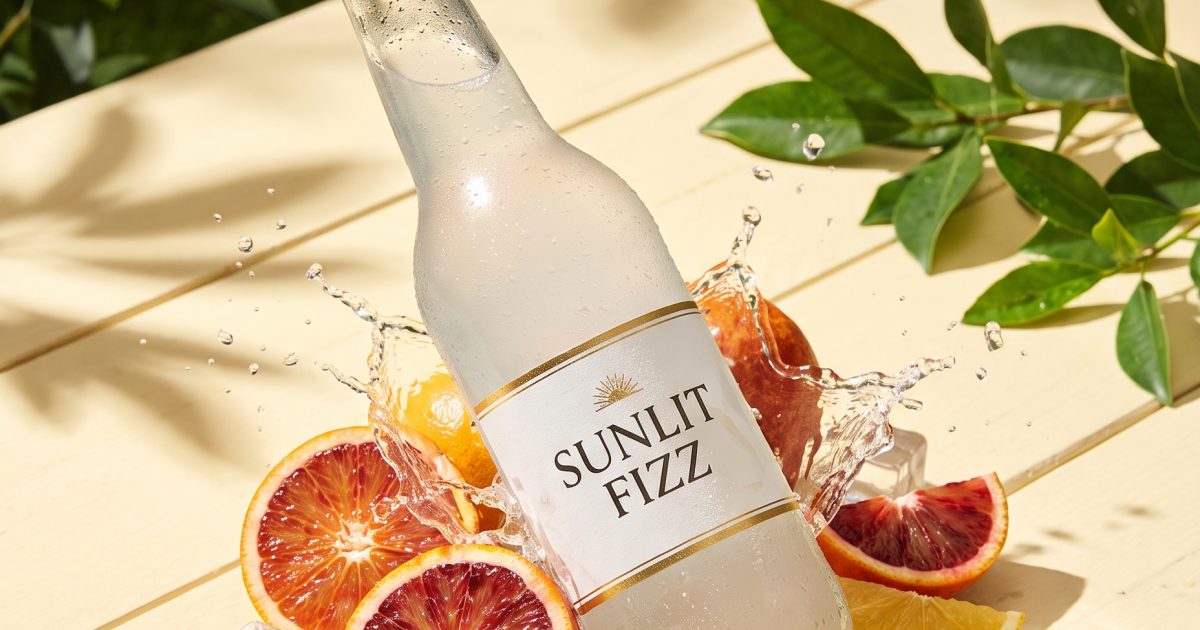
This citrus soda nano banana pro prompt is built for crisp campaign art with a product label the model has to render clearly.
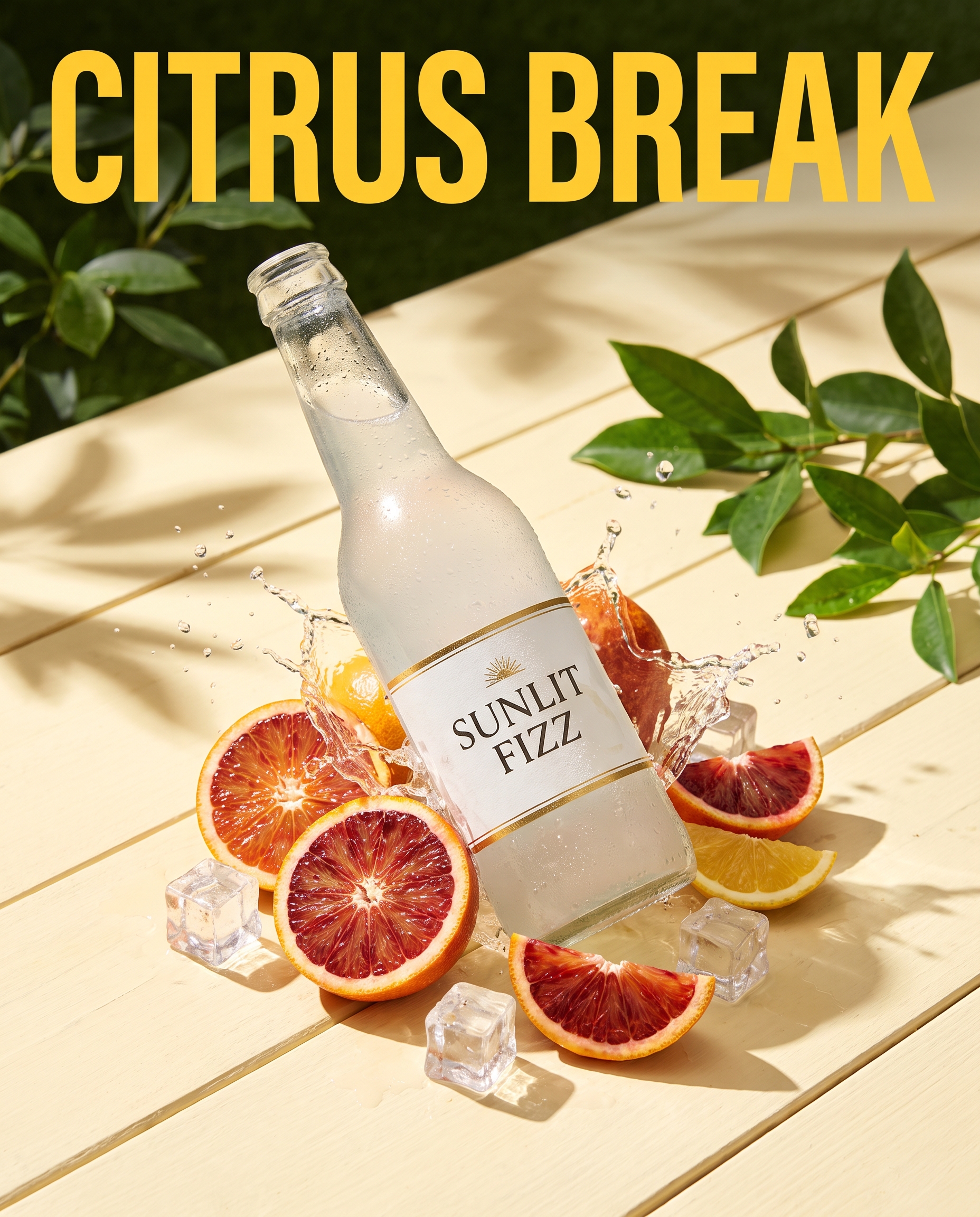
Citrus break poster
Premium sparkling citrus soda advertising poster. A frosted clear glass bottle splashes through sliced blood oranges and ice on a sunlit pale-yellow picnic table. Condensation beads, crisp afternoon shadows, botanical leaves, clean editorial product photography. On the bottle label, render the exact legible words SUNLIT FIZZ. At the top, render the exact headline CITRUS BREAK. No other text. Vertical campaign poster.Settings: Google Nano Banana Pro · 4:5 · 2K · safety OFF
Variations
Cobalt studio bottle
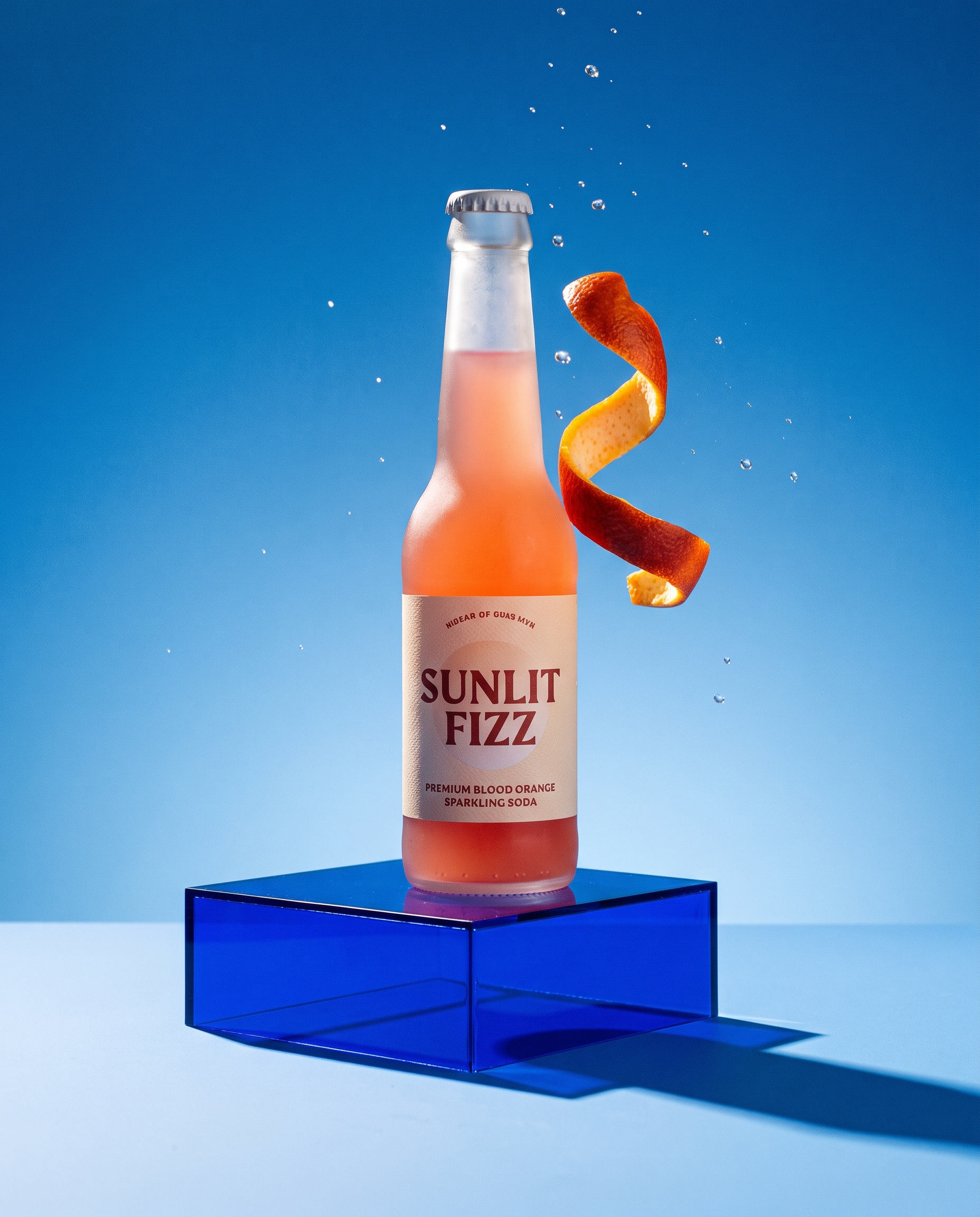
Studio product photograph for a premium blood orange sparkling soda. One frosted glass bottle on a glossy cobalt-blue acrylic plinth, orange peel ribbon floating beside it, tiny water droplets frozen in the air, hard noon sunlight and deep blue shadows. On the bottle label, render the exact legible words SUNLIT FIZZ. No other text. Clean 85mm commercial photography, vertical.Settings: Google Nano Banana Pro · 4:5 · 2K · safety OFF
Picnic flat lay
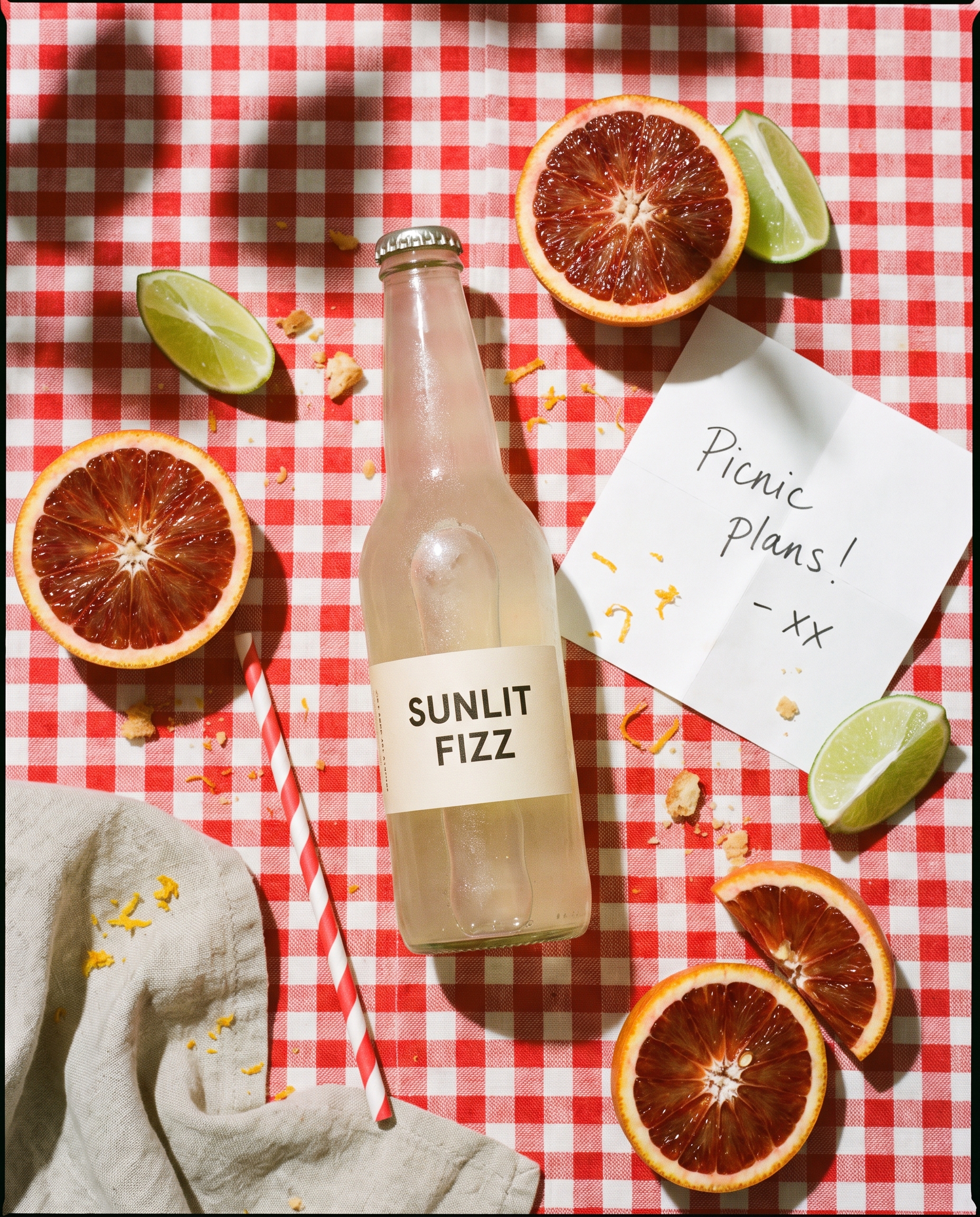
A playful citrus soda flat lay on a gingham tablecloth: chilled clear glass bottle, blood orange halves, lime wedges, striped paper straw, folded handwritten picnic note, and sun-cast leaf shadows. Fresh imperfect styling, editorial food photography. On the bottle label, render the exact legible words SUNLIT FIZZ. No other text. Vertical 4:5.Settings: Google Nano Banana Pro · 4:5 · 2K · safety OFF
Why this Citrus Soda Nano Banana Pro prompt works
- The hero product and lighting direction are unambiguous.
- The exact-text constraint gives the model one clear label task.
- Specific surfaces and fruit make the ad feel photographed, not templated.
More Nano Banana Pro prompts
Browse all Nano Banana Prompts. For another commercial-image route, explore GPT Image 2 Prompts.
The model maker’s documentation: Nano Banana Pro on Google DeepMind.
Run this prompt yourself
Every example above was generated on Wiro. Paste the prompt, pick the model, and get your own result.