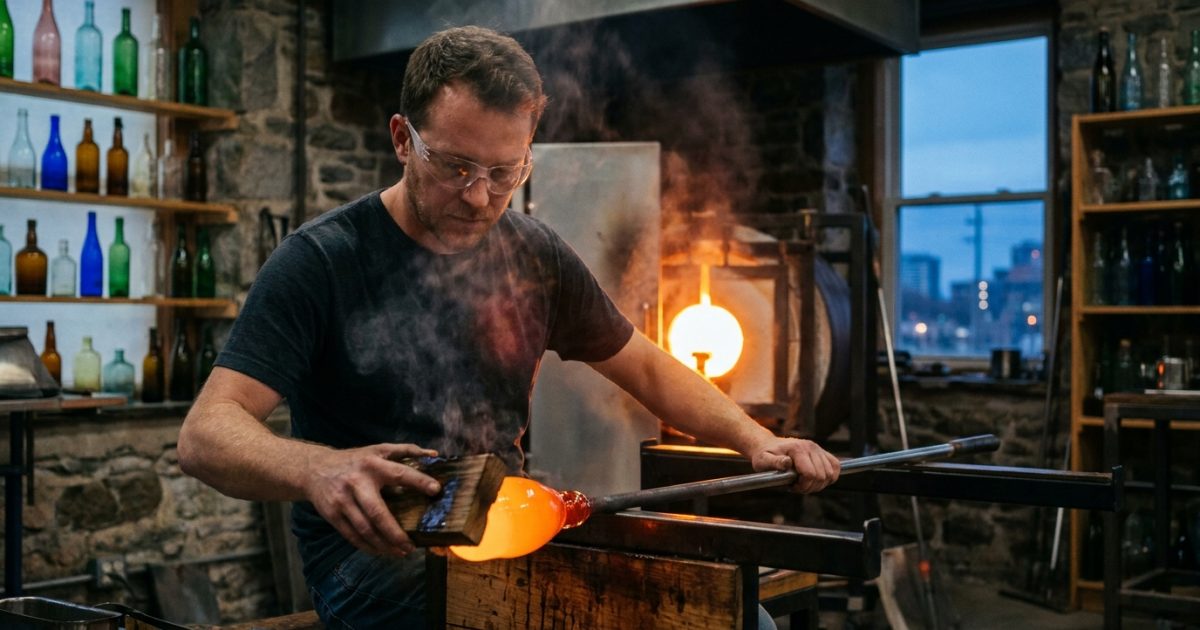
This Glassblower Studio MiniMax H3 prompt makes a five-second craft film with detailed hand work, molten glass, a short camera move, and a sound plan that fits a maker reel or a cinematic process clip.
Main Molten Glass Shot
integrated_multimodal_description: [Shot 1, 0.00-2.50] Inside a dark glassblower studio at blue hour, an artisan wearing clear safety glasses gathers molten orange glass on a steel pipe, carefully shaping it with wet wooden blocks using both hands. The camera tracks sideways past shelves of colored bottles. [Shot 2, 2.50-5.00] The artisan inflates the glowing glass into a round vase, lifts it toward the camera, and the furnace flame flickers behind. Detailed hands, sparks, heat shimmer, cinematic macro texture, 50mm lens. overall_soundscape: furnace roar, metal tools, a breath through the pipe, quiet workshop room tone. non_diegetic_music: slow restrained cello notes.Settings: MiniMax H3, text-to-video, 5 seconds, 768P, 16:9.
The opening gives the model a practical action with an obvious tool, material, and hand position. The result is easier to follow than a generic request for an artisan at work. The sideways track also has a clear route: it passes the bottle shelves, then lands on the growing vase.
Variations
Cobalt Bowl Finish
integrated_multimodal_description: [Shot 1, 0.00-2.30] A glassblower studio lit by a single skylight. An artisan rotates a cobalt-blue glass bowl on a pipe while a second craftsperson opens the furnace door in the background. The camera begins on the glowing rim and racks focus to the makers faces. [Shot 2, 2.30-5.00] The first artisan uses long shears to cut the rim, then places the finished bowl beside three other jewel-toned vessels. Calm observational camera work, soft smoke, fine glass reflections. overall_soundscape: furnace hiss, quiet tool clicks, low room ambience. non_diegetic_music: sparse acoustic guitar.Settings: MiniMax H3, text-to-video, 5 seconds, 768P, 16:9.
This variation uses a focus pull instead of a tracking move. The second person stays in the background, so the main maker and the bowl keep visual priority. The final placement beside three vessels gives the clip a finish without demanding a new location or a hard cut.
Why this Glassblower Studio MiniMax H3 prompt works
- It places the craft action before the style language.
- It gives the camera one direction and one destination.
- It asks for detailed hands in a task where hand placement matters.
- It separates workshop sounds from the audience-facing music cue.
- It ends with a simple, visible result: a vase held up or a bowl placed down.
MiniMax H3 benefits from prompts that describe the whole sequence, then name the camera and audio information. The visual path here stays continuous: gather glass, shape it, inflate it, present it. That continuity matters more than adding extra adjectives. A strong material cue such as molten orange glass also gives the model something to carry across both shots.
Hands are a useful stress test because the action must remain believable while the camera moves. This prompt gives both hands a named job and avoids rapid cuts. If the hands drift, simplify the first beat to one tool. If the vase shape matters more, replace the shelves with a fixed workbench and keep the side track shorter.
Sound needs the same discipline. The furnace, metal tools, and breath through the pipe all belong to the room. The cello sits outside that room as score. MiniMax’s official video prompt structure uses those separate fields for a reason: audio choices become easier to control when they have a role.
More MiniMax H3 prompts
See the growing MiniMax H3 Prompts collection for more video prompts. For another crafted-object approach, browse Seedance 2.5 Prompts.
Run this prompt yourself
Every example above was generated on Wiro. Paste the prompt, pick the model, and get your own result.




2 Comments