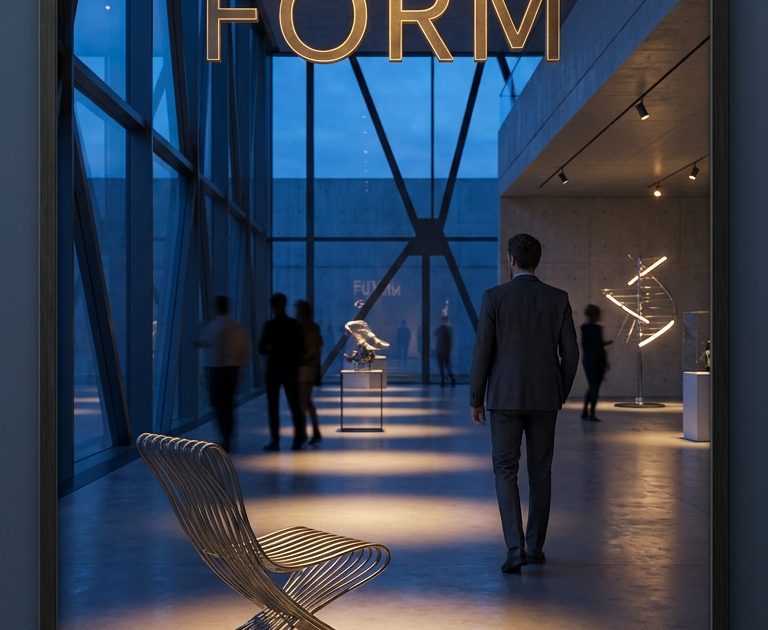
This Kinetic Museum Exhibit MiniMax H3 prompt makes a polished design-film reveal with readable signage, moving visitors, and a controlled camera move. Use it for gallery concepts, luxury interiors, or short social cutdowns that need a clear focal point.
Main museum reveal
A kinetic design museum at blue hour. In one continuous 5-second shot, a curator in a charcoal suit walks through a glowing hall as six suspended brass letters rotate into place to spell FUTURE FORM above a sculptural chair. The camera begins wide, then makes a smooth low dolly-in past the chair. Visitors pause and point, fabric and hair move naturally. Soft gallery footsteps, a quiet synth swell, warm spotlights against cobalt window light, refined architectural film, realistic hands, crisp legible lettering.Settings: MiniMax H3, image-to-video style text-to-video run, 9:16, 5 seconds, 768P, continuous low dolly-in, gallery footsteps and synth swell.
Variations
Floating brass bird
Inside a contemporary design museum after dark, a woman in a silver coat stops beside a glass case. The case opens and a small kinetic bird sculpture lifts into the air, its brass wings moving softly. The camera makes a slow orbit from shoulder height as reflections slide across polished concrete. Hushed gallery room tone, a delicate chime, warm pools of light, cinematic 50mm, natural hand movement, calm luxury mood.Settings: MiniMax H3, text-to-video, 9:16, 5 seconds, 768P, slow shoulder-height orbit, quiet room tone and chime.
Why this Kinetic Museum Exhibit MiniMax H3 prompt works
- The scene arrives first: an identifiable museum, one curator, one chair, and a specific suspended sign.
- The action has an easy sequence. Visitors enter the frame, the letters rotate, and the camera passes the chair.
- FUTURE FORM gives the model a single, short text target rather than a crowded wall of typography.
- Camera direction stays physical and simple. A low dolly-in suits a five-second clip and keeps the reveal readable.
- Sound details support the place without competing with the visual beat: footsteps, a restrained synth, and no dialogue.
The clean result comes from treating the Kinetic Museum Exhibit MiniMax H3 prompt as a tiny shot list. MiniMax H3 responds well when the location, action, camera, and audio all live in the same paragraph. Here, the first sentence sets the hall and subject. The next two sentences create the reveal. The final phrases lock in lighting, lens feel, and movement quality.
Keep the lettering brief when testing a concept video. A two-word sign has a better chance of reading cleanly than a paragraph. It also gives the shot a reason to move forward. The curator and visitors make the room feel occupied, while the chair provides a stable foreground object for the dolly move.
For a more editorial result, replace the sculptural chair with the product or installation being pitched. Keep the same path through the space. If the clip needs a slower mood, remove the visitors and ask for a locked-off shot. If it needs more energy, switch the dolly-in to a lateral track and give the sign one simple transformation.
More MiniMax H3 prompts
Browse the full MiniMax H3 prompt collection for more clips. Related examples include Glassblower Studio, Rooftop Chess Match, and Pocket Planet Repair. For another cinematic video workflow, see Seedance 2.5 prompts.
For the maker’s own notes on this model, see MiniMax's H3 video prompt writing guide.
Run this prompt yourself
Every example above was generated on Wiro. Paste the prompt, pick the model, and get your own result.