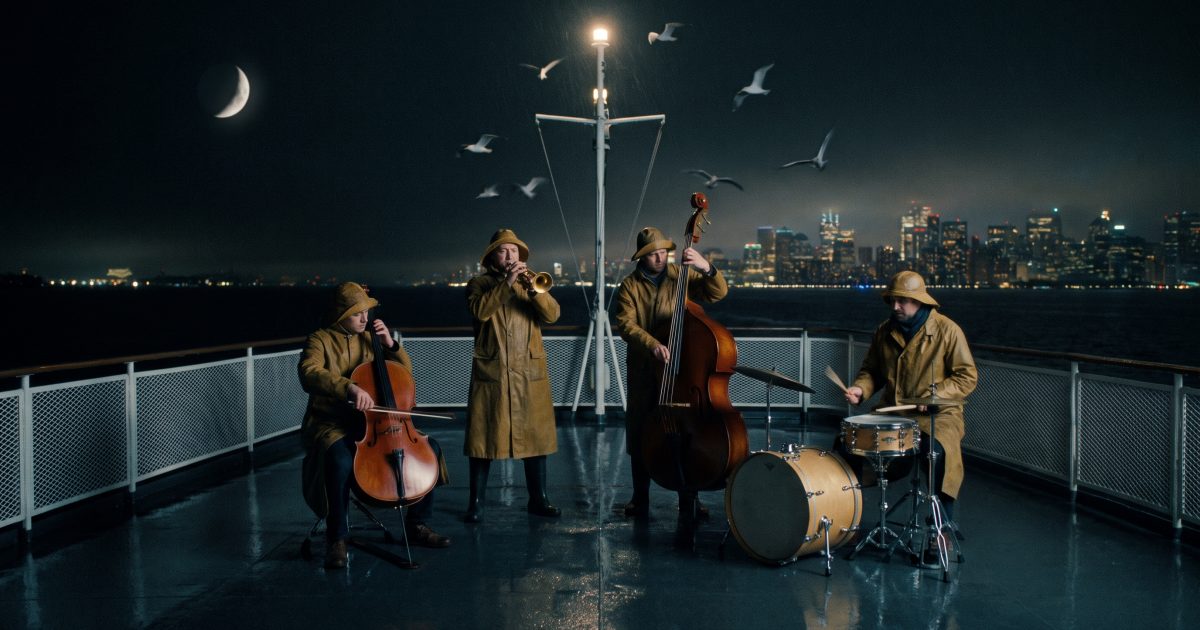
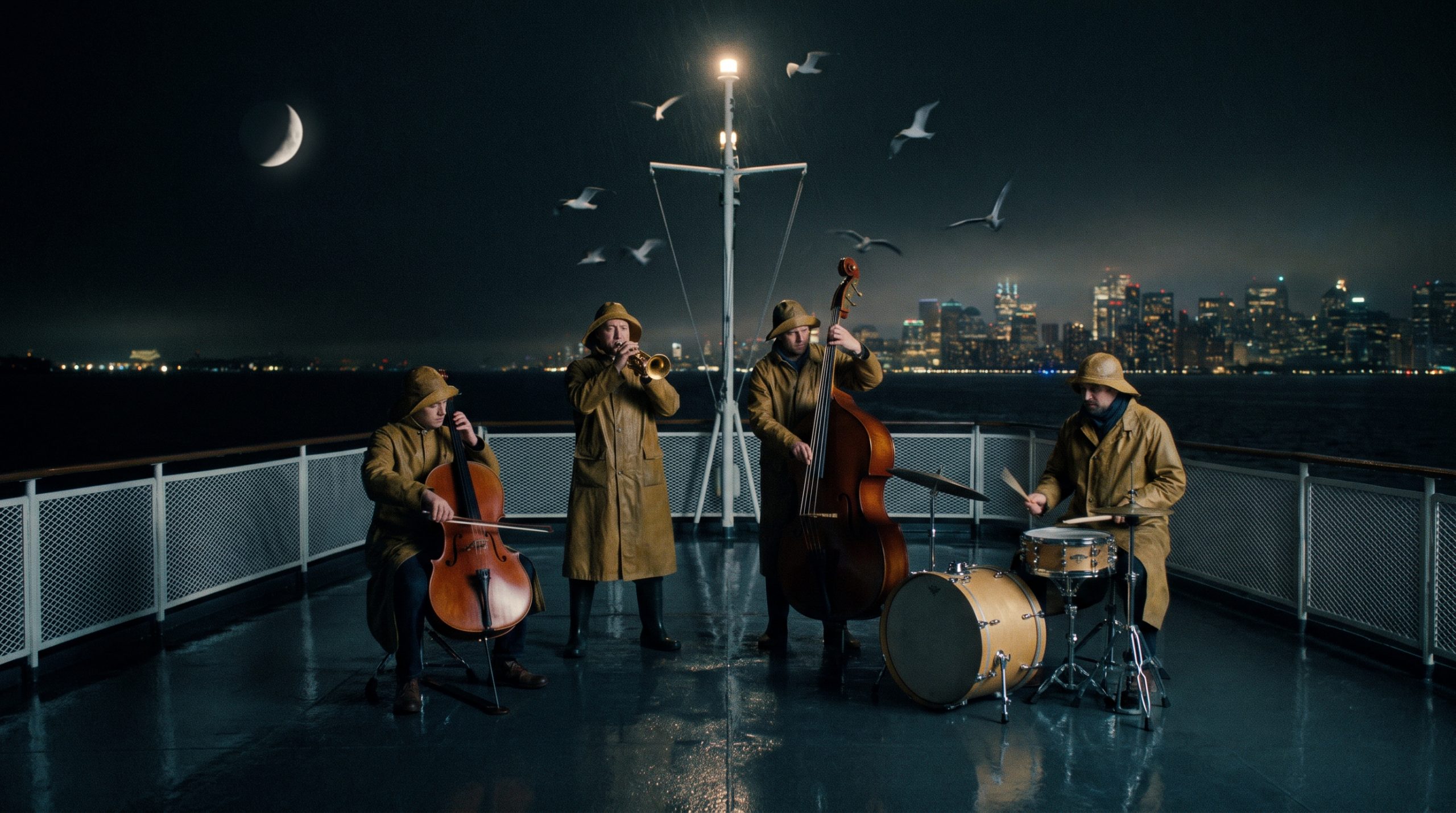
The Night Ferry Orchestra Wan 2.7 Prompt puts a four-piece jazz group on a moving midnight ferry without asking the model to change locations. The clip works because the first frame already holds the full band, the boat, and the skyline. Motion can stay focused on playing, water, wind, and a controlled camera track.
Night Ferry Orchestra Wan 2.7 Prompt
Use a prepared image as the first frame. Then describe where the shot begins and where it travels. Naming each instrument matters here. It gives Wan 2.7 a useful checklist for the scene while the prompt asks for believable hands and stable instruments.
First frame
Main example
Open on the wet brass rail of the midnight ferry, then smoothly track along the deck past the four musicians. The cellist draws one long bow, the trumpet player lifts the horn, and the mast light swings with the boat. Black water catches moonlight and the distant skyline slides behind them. Keep all four instruments stable and hands believable. 35mm cinematic night film, gentle ferry engine, gulls and live jazz. No captions, no text.Settings: Alibaba Wan 2.7, image-to-video, 5 seconds, 720P, first-frame input, prompt extend off, watermark off.
Variations
Trumpet orbit variation
On the same moonlit ferry deck, start close on the trumpet valves and pull back into a wide orbit around the quartet as they finish a short phrase. The cellist, bassist and drummer stay in time while gulls pass the mast light. Keep the vintage raincoats, wet reflections and far skyline consistent. Realistic instrument handling, 35mm night cinema, boat creaks, wind and live jazz. No captions, no text.Settings: Alibaba Wan 2.7, image-to-video, 5 seconds, 720P, same first-frame input, prompt extend off, watermark off.
Why this Night Ferry Orchestra Wan 2.7 Prompt works
- The first frame establishes every player before the camera begins to travel.
- The prompt names four instruments, so the performance has clear visual roles.
- The main clip limits the movement to a track along one deck.
- Sound cues support the scene without forcing a dialogue beat.
- The variation changes the camera path, not the cast or location.
Four performers make this a useful stress test. The prompt avoids competing actions by giving each musician one small job. The ferry supplies gentle background motion, while the rail, mast light, and skyline make the route easy to read. If a result becomes busy, shorten the performer actions before removing the camera direction.
Shot planning notes
Set up the source image like the opening frame of a music video. Put the ensemble in a shallow row, keep the rail and mast in view, and leave a clean route for the camera. The wet deck carries reflections through the whole clip. The far skyline gives the ferry a sense of travel without turning the scene into a location change.
Each performer should have one readable movement. The cello bow travels once. The trumpet rises. The drummer can keep a light pulse. That restraint matters more than a long list of flourishes. The camera track then has room to show faces, instruments, and water in a single pass. The orbit variation keeps the same cast and tests a different move rather than a different story.
For another pass, keep the first frame and change only one camera phrase. That isolates the change and makes comparisons useful. If instruments bend or hands look busy, reduce the number of simultaneous gestures. If the skyline shifts too much, ask for a slower pullback. The strongest version feels like one continuous take filmed from a real deck.
More Wan 2.7 prompts
See the complete Wan 2.7 Prompts category for real clips and copyable settings. More after-dark scene studies include Rainy Record Store Wan 2.7 Prompt, Night Shift Laundromat Wan 2.7 Prompt, and Solarpunk Bus Stop Wan 2.7 Prompt. For another collection built around music and motion, explore Grok Imagine Video 1.5 Prompts.
For the maker’s own notes on this model, see Wan 2.7 docs on Alibaba Cloud Model Studio.
Run this prompt yourself
Every example above was generated on Wiro. Paste the prompt, pick the model, and get your own result.