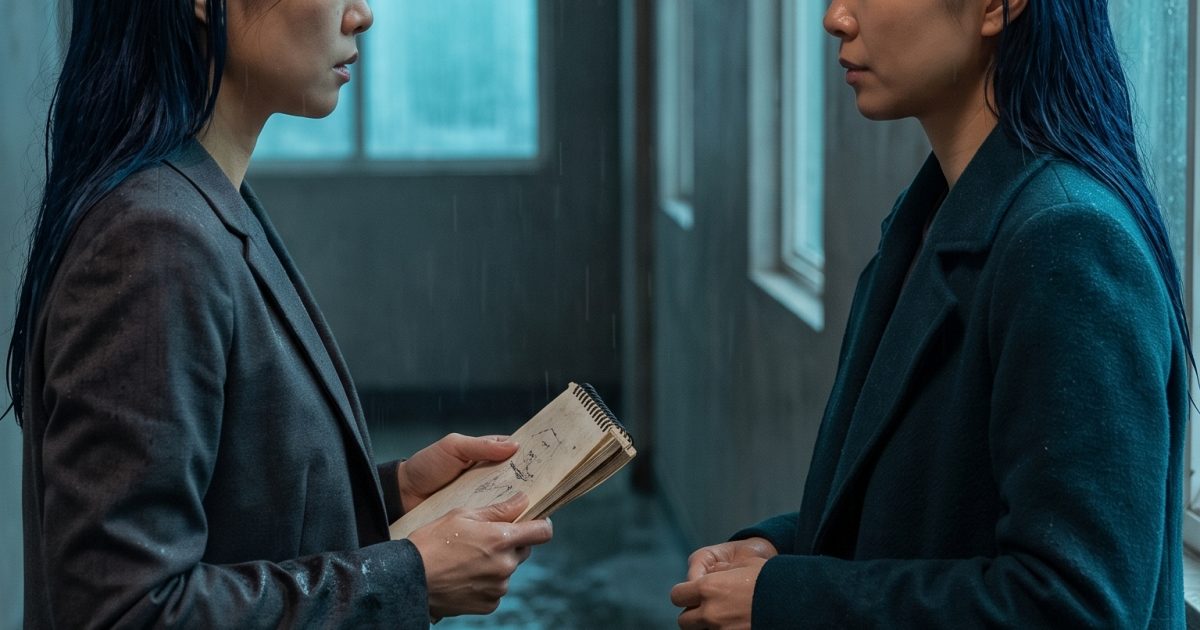
This Two Versions of Yourself Wan 3.0 Prime R2V Prompt creates a quiet meeting between one woman’s past self and present self, built for the emotional AI video trend now filling reels. Use it when a fast transition video needs an actual story beat, not just two versions of the same character in one shot.
The trend works because viewers understand the setup before anyone speaks: one person has changed, but the earlier version is still there. In this version, a sketchbook becomes the handoff. It gives both characters something to do and gives the camera a reason to move closer.
Recent reels describe the same format as a two-versions-of-yourself AI video, often placing an old self and a new self in a charged location. The original trend reference is this Instagram post. The scene below avoids copying anyone else’s prompt text and uses one fictional adult identity rather than a real person’s likeness.
Two Versions of Yourself Wan 3.0 Prime R2V Prompt
Rain-lit hallway handoff
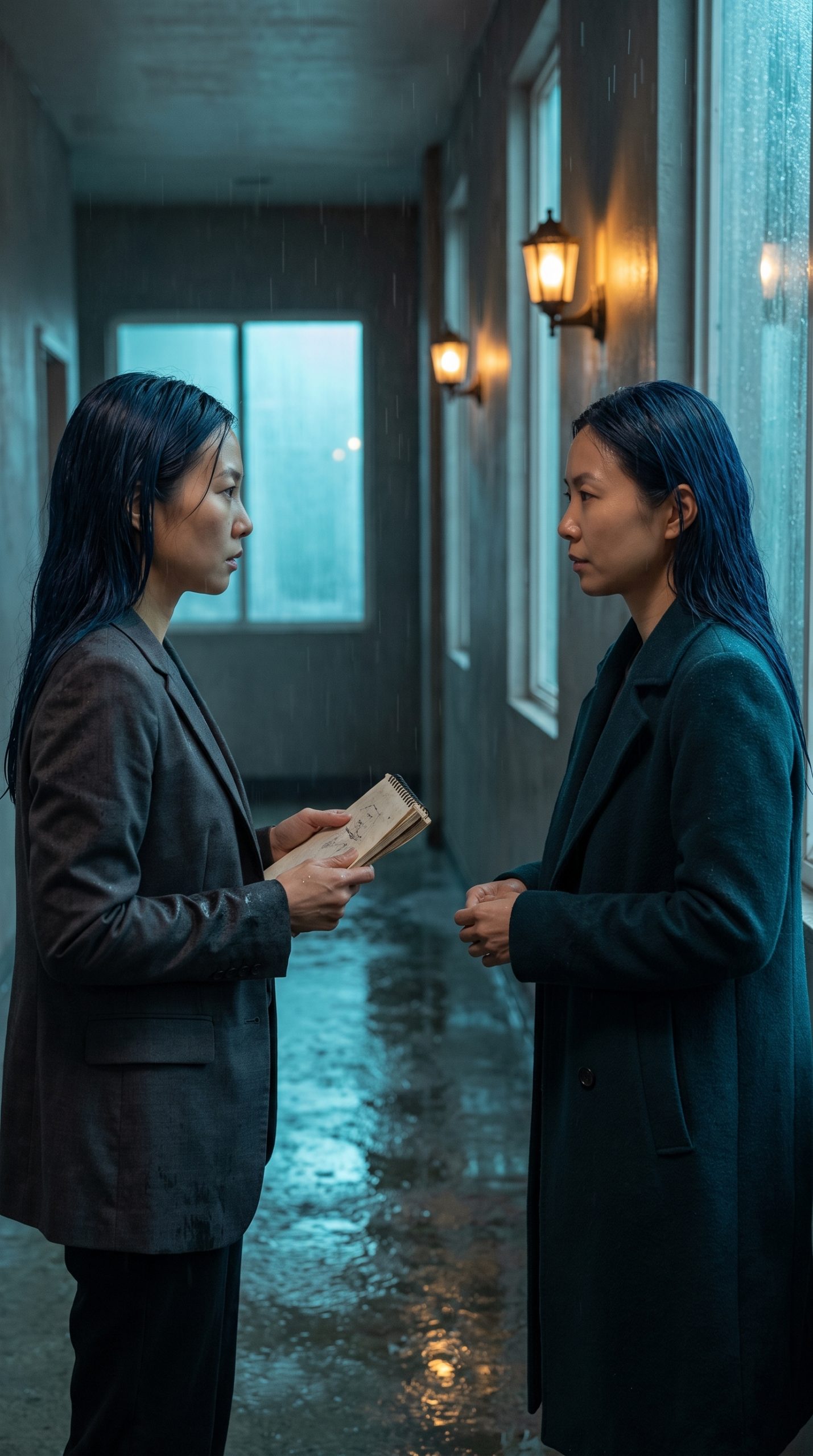
Vertical cinematic video, 5 seconds. Use the supplied reference portrait as the exact identity anchor for both characters. In a rain-lit hallway at blue hour, the same adult woman appears twice in one shot with identical facial identity, bone structure, skin tone, hair, and features. Her earlier version wears a charcoal blazer and carries a small worn sketchbook; her present version wears a teal coat. They stop an arm length apart, exchange a silent emotional look, then the earlier version gently places the sketchbook in the present version's hands. Slow dolly-in from a medium-wide shot to a close two-shot, wet floor reflections, soft cyan and amber practical light, natural hair and clothing movement, 35mm film texture, restrained color grade, realistic hands, no dialogue. The two figures must be the same woman, not lookalikes and not different people.Settings: Alibaba Wan 3.0 Prime R2V, reference image: identity reference portrait, 9:16, 5 seconds, 720p.
What makes the scene land
Start with a shared silhouette, then split the clothing into two readable eras. The charcoal blazer and battered sketchbook suggest the earlier moment without adding a caption. The teal coat looks considered and calm. That contrast carries the idea even on mute.
Keep the action small. A hug, a chase, or a big reveal can make the trend feel staged. Here, the transfer of the sketchbook does the emotional work. It also helps the model keep the two figures apart because each person has a distinct hand position and prop.
The prompt pins one identity, then lets wardrobe and the sketchbook carry the two eras. That keeps the visual story clear while both figures remain the same fictional woman.
How the prompt is built
The opening line sets the format before the scene starts. “Vertical cinematic video, 5 seconds” tells the model to frame for a phone screen and keep the action to one clean beat. A short duration matters here. There is enough time for recognition and a handoff, but not enough room for a second plot.
Next comes the identity instruction: use the supplied portrait as the exact anchor for both characters. It appears before the location and wardrobe on purpose. The model gets the most important casting decision first, then receives the details that separate the two time periods.
The hallway at blue hour does practical work, not just mood work. Its long lines hold both people in a single composition. Wet reflections add depth near their feet, while cyan and amber lights separate the coats without hiding either face. A busy cafe or crowded street would make the same moment harder to read.
The wardrobe line gives each version a job in the frame. The earlier self has the blazer and carries the sketchbook. The present self wears the teal coat and receives it. Those clear roles make the handoff less ambiguous than “they exchange an object.” Naming the object also gives the camera a natural point of focus during the dolly-in.
The final camera and finish notes protect the tone. Starting medium-wide proves that there are only two figures. Moving to a close two-shot lets the glance register. Natural hair, clothing movement, and realistic hands prevent the shot from turning into a still image with a camera effect. “No dialogue” keeps attention on the gesture.
Why one identity reference matters
Without a single reference portrait, a prompt can accidentally read like a casting brief for two similar women. Phrases such as “younger woman meets older woman” invite the model to invent two characters. The result may have matching hair or a similar palette, but the faces can still drift.
One identity reference changes the instruction. There is one source face, duplicated into two versions in the same scene. The prompt then repeats the continuity request in plain terms: identical facial identity, bone structure, skin tone, hair, and features. It also closes with “the same woman, not lookalikes and not different people.” That redundancy is useful because identity is the premise, not decoration.
Use a portrait you own or have permission to use. A front-facing image with even light, visible eyes, and no heavy filter gives the model the cleanest anchor. Keep age changes in wardrobe, posture, props, and color rather than asking it to generate a second face.
Why this Two Versions of Yourself Wan 3.0 Prime R2V Prompt works
- It gives the model a clear five-second sequence: approach, stop, look, handoff.
- The rain-lit hallway, wet floor, and practical light establish the mood before the camera reaches the faces.
- A medium-wide opening gives both versions room, while the slow dolly-in earns the close emotional moment.
- The sketchbook anchors the hand interaction and reduces ambiguous motion.
- Audio stays out of the way, so the visual pause before recognition does the emotional work.
Settings that change the result
The 9:16 frame suits reels because both figures can remain full or three-quarter length while the hallway keeps leading upward behind them. A horizontal frame gives more room for the setting, but the two people may feel farther apart. For this idea, portrait framing makes the meeting feel personal.
Five seconds forces restraint. If a render feels rushed, simplify the action rather than adding another beat. Keep the approach implied and let the clip show the stop, glance, and transfer. At 720p, the wet floor texture and faces remain clear while the prompt stays practical for a short social clip.
The reference image controls identity consistency. The lighting and lens language control mood. Change 35mm film texture to a clean digital look for a sharper contemporary reel, or remove it for a more neutral test. Keep the slow dolly-in if the emotional look is the point; a fast push-in makes the scene feel more like a trailer.
How to adapt the trend
Change the prop before changing the location. A childhood cassette, a folded letter, a house key, or a paint-stained glove can turn the same structure into a musician, traveler, or artist story. Keep one person holding it first and the other accepting it last. That simple direction preserves the emotional rhythm.
For a warmer result, replace the rain-lit hallway with late afternoon in a wheat field. For something more surreal, set the meeting inside a deserted train station, but keep the camera move slow. Fast cuts undercut the reason people stop scrolling for this trend: the pause before recognition.
Wan 3.0 Prime R2V accepts reference media when identity continuity matters. A reference portrait is what keeps both figures the same person; use one you have permission to use.
Try a different era cue
Swap the blazer and sketchbook for a faded denim jacket, cassette player, and early-2000s bus stop. Keep the same reference portrait and write “the same adult woman appears twice” exactly as in the original. Era cues should live in clothing, props, and production design, not in a request for a different person.
Move the meeting outdoors
Set the scene on a quiet seaside pier at first light. Give the earlier version a canvas tote and the present version a structured coat, then have them pass a folded postcard. The railings create the same simple leading lines as the hallway, while wind adds gentle movement to hair and fabric.
Make it a single-shot mirror moment
For a more compact version, place both versions at opposite ends of a subway platform and have them see each other through a train window. Ask for one locked-off medium-wide shot rather than a dolly-in. The reflection and passing train create the transition energy, while the single take keeps the identity comparison honest.
Common mistakes to avoid
Don’t describe them as two characters, two women, or a younger woman and an older woman without first naming one shared identity reference. That wording tells the model to cast separate people. Start with one person and then state that she appears twice.
Faces drift when the prompt gives more detail to the wardrobe than to identity. Keep the reference instruction near the start, repeat the shared facial traits once, and avoid conflicting hair, skin, or age descriptions. If one version needs to feel earlier in life, use the prop and styling instead of changing facial structure.
Extra people often appear when the location implies a crowd. Avoid commuters, party guests, passersby, or a “busy hallway” in this prompt. State that the scene contains only the two versions. A medium-wide opening also makes unexpected background people easier to spot before the camera moves closer.
More Wan video prompts
Browse the Wan 3.0 Prime R2V Prompts category for more clips. For an earlier Wan video workflow, see Wan 2.7 Prompts.
Run this prompt yourself
Every example above was generated on Wiro. Paste the prompt, pick the model, and get your own result.





1 Comment