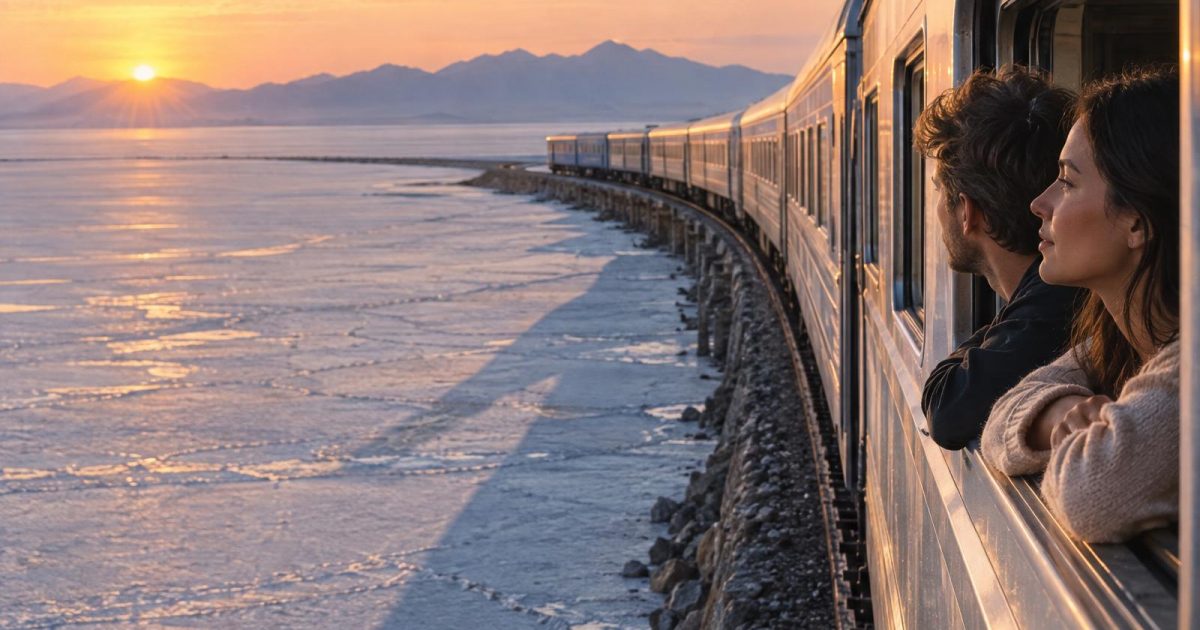
This Solstice Line GPT Image 2.5 prompt makes a polished rail-travel poster with readable type, natural people, and a clear route story. Use it for poster concepts, fictional destinations, or editorial travel art that needs more than a pretty landscape.
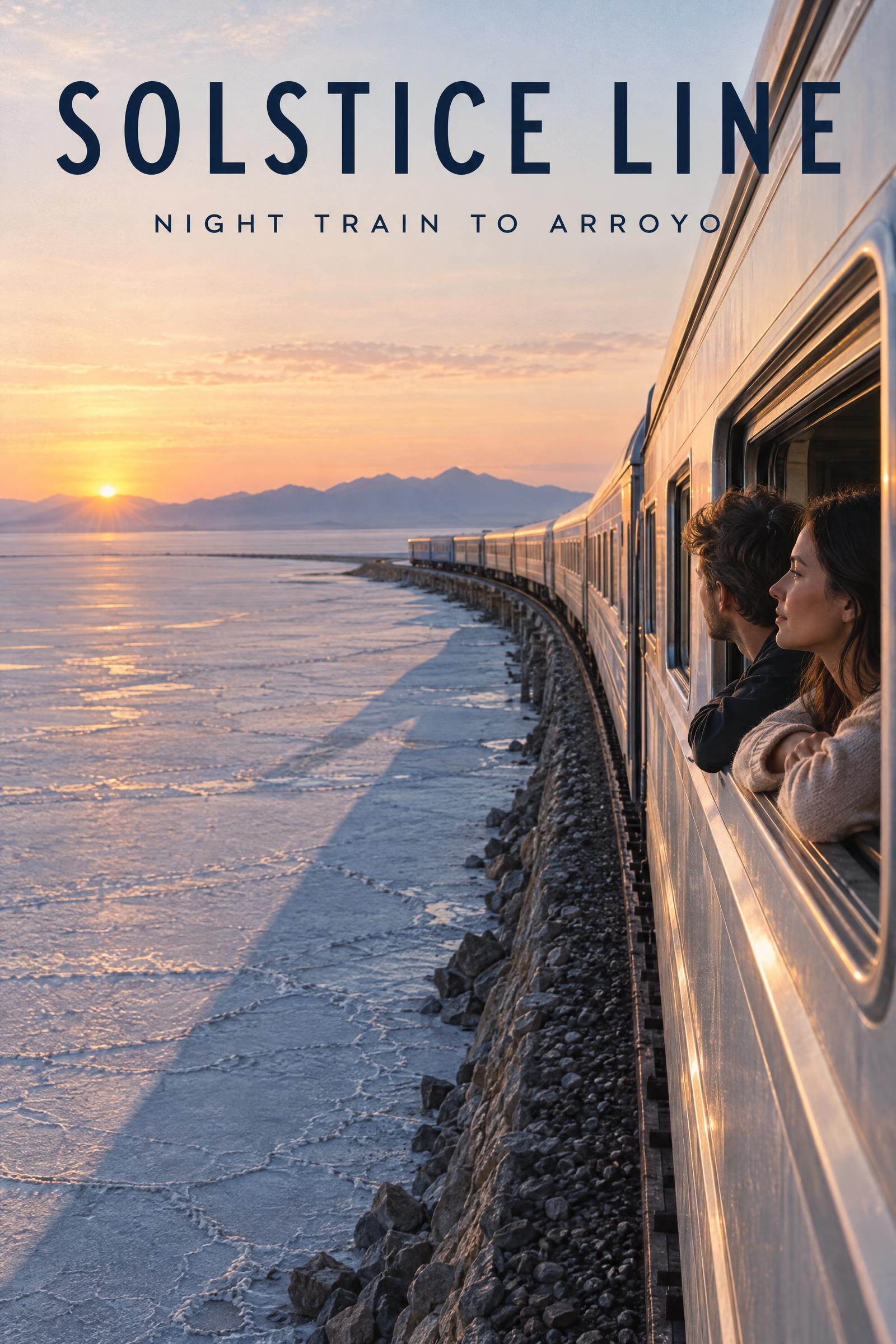
Solstice Line poster
A premium travel poster for a fictional overnight sleeper train crossing a salt flat at dawn. The silver train curves along a raised track, two travelers visible at the window with believable hands, pale peach sky and long blue shadows. Clean screen-print layout with crisp, perfectly legible navy headline text at the top: SOLSTICE LINE. Smaller text below reads: NIGHT TRAIN TO ARROYO. Fine paper grain, art-directed editorial photography, 50mm lens, vertical 2:3 composition, no logos.Settings: GPT Image 2.5 Sunburst, 2:3, 2K, high quality, opaque JPEG.
Variations
Aurora Funicular
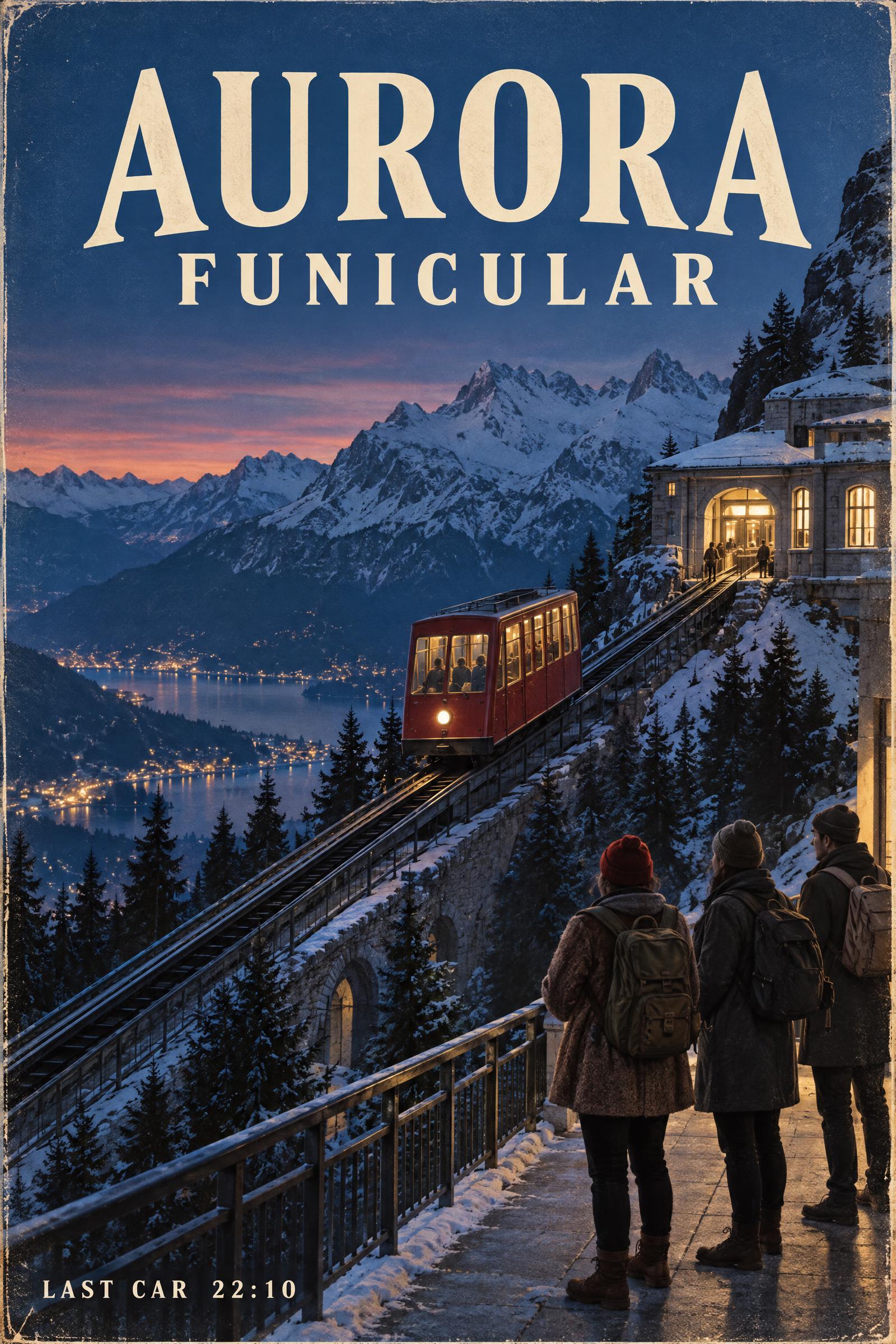
A vintage travel poster for a fictional mountain funicular at blue hour. A red carriage climbs above dark pines toward a snow-lit station, three hikers in wool coats stand on the platform with natural hands. Crisp cream lettering in the top third reads: AURORA FUNICULAR. Small caption reads: LAST CAR 22:10. Lithographic texture, cinematic 35mm photography, vertical 2:3 composition, no logos.Settings: GPT Image 2.5 Sunburst, 2:3, 2K, high quality, opaque JPEG.
Lake Aurelia ferry
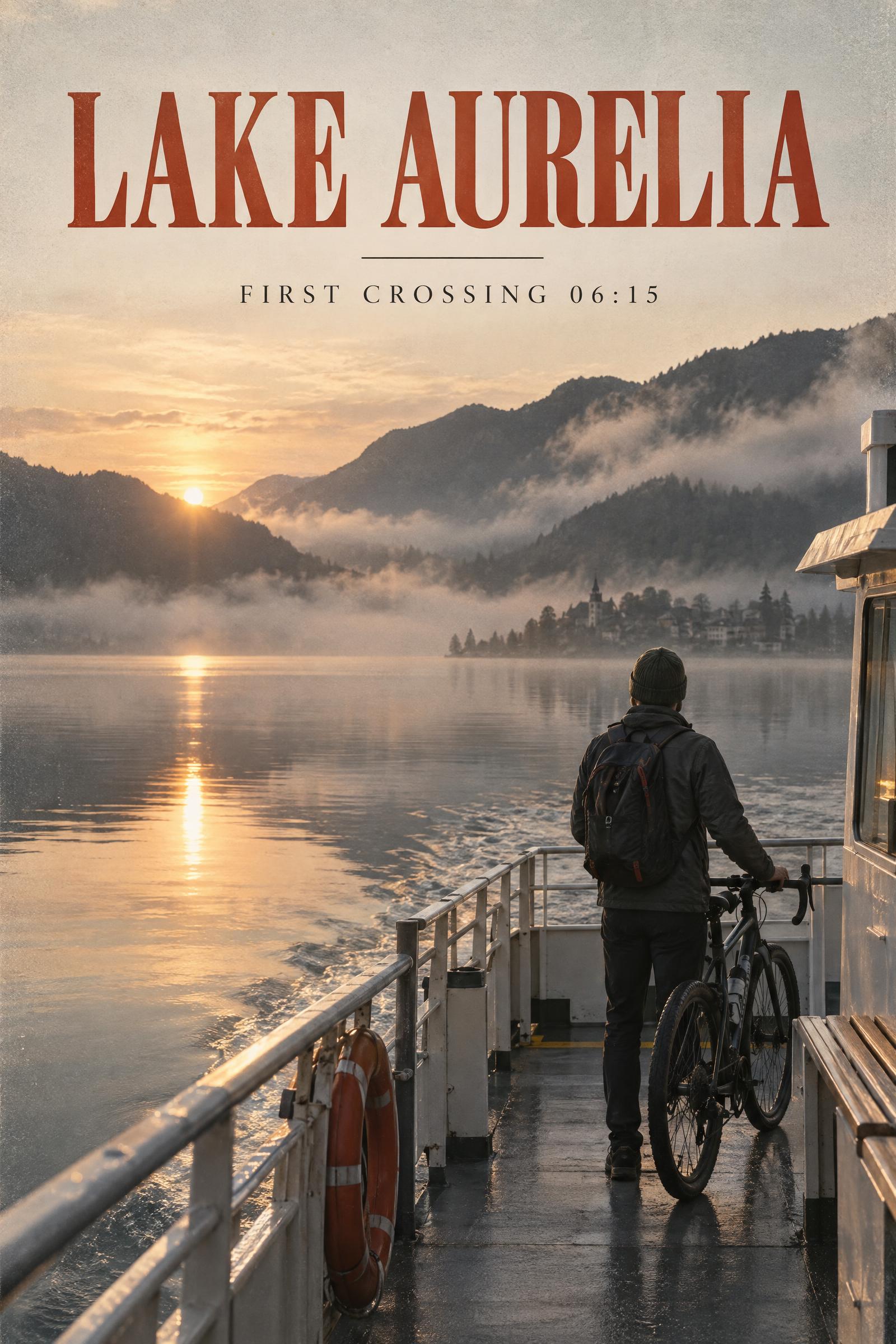
An editorial travel poster for a small electric ferry crossing a glassy lake at sunrise. One cyclist holds a bicycle on deck with believable hands, mist wraps the black hills. Bold rust-red title text reads: LAKE AURELIA. Fine subtitle reads: FIRST CROSSING 06:15. Offset print texture, quiet luxury travel photography, 85mm lens, vertical 2:3 composition, no logos.Settings: GPT Image 2.5 Sunburst, 2:3, 2K, high quality, opaque JPEG.
Why this Solstice Line GPT Image 2.5 prompt works
- It names the deliverable first. That gives the model a firm layout goal before the scene details arrive.
- The train, travelers, track, and salt flat each have a job in the composition, so the image has depth without becoming crowded.
- The type instruction includes the exact words, placement, color, and hierarchy. That makes the poster copy part of the brief rather than an afterthought.
- Lens, print texture, and lighting establish a useful tension: it feels photographed, then printed as an artifact.
- The no-logos constraint keeps the concept suitable for a fictional route.
For a stronger result, keep the headline short. A route name and one supporting line give the design enough information while leaving room for the train. Changing the location, vehicle, and palette produces a new campaign without changing the underlying structure. The same approach works for ferry lines, mountain railways, and city tram concepts.
GPT Image 2.5 responds well when the text has a physical place in the design. Here, the upper third acts as a reserved sign field. Asking for readable copy alone is less reliable because the model has no guidance about where the letters belong. A graphic color field and a precise hierarchy make that request easier to honor.
More GPT Image 2.5 prompts
Browse the full GPT Image 2.5 Prompts collection for more examples. For an earlier model version, see GPT Image 2 Prompts.
For the maker’s own notes on this model, see OpenAI's image prompting guide.
Run this prompt yourself
Every example above was generated on Wiro. Paste the prompt, pick the model, and get your own result.



1 Comment